Night walks and strange habits
Hedgehogs are nocturnal, solitary and busy. And sometimes they froth.
The night shift
Hedgehogs roam an average of about 2 km a night; breeding males can cover up to 3 km. Home ranges average 10–20 hectares. Hedgehog Street That’s a lot of gardens, which is why the hedgehog highway matters.
Eyesight is poor; hedgehogs find food mainly by smell and hearing. Hedgehog Street
Self-anointing
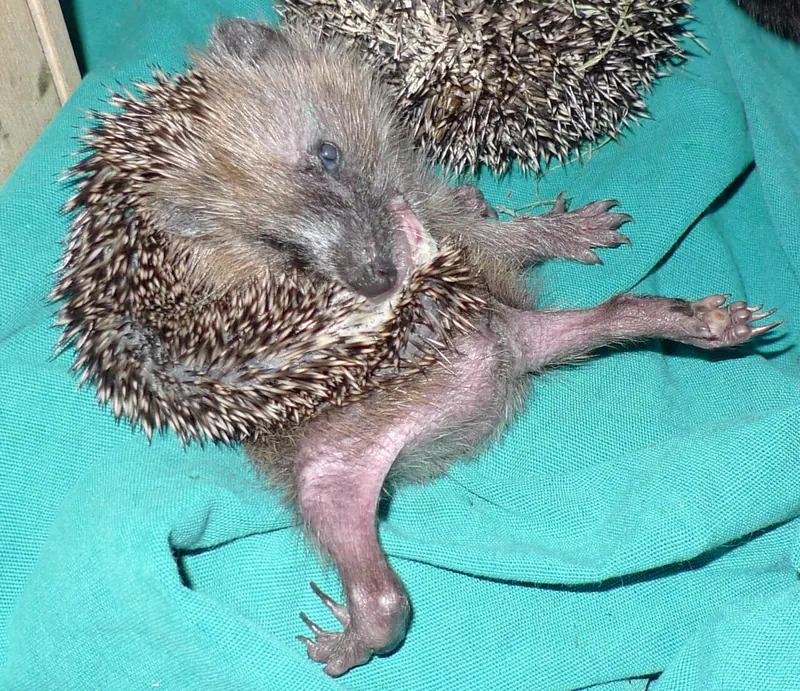
Self-anointing: a hedgehog chews a strong-smelling substance, froths, and spreads the foamy saliva over its spines. Nobody is quite sure why. source
Self-anointing has been seen in hoglets as young as 15 days old, before their eyes open. source In one study, signs of self-anointing turned up in over 11% of observations, more often in first-year young and in males. source
Hedgehogs sometimes bite into toads' poison glands and smear the mixture on their spines. source Theories include camouflaging their scent or adding a bit of chemical defence; nobody has settled it.
Swimming and climbing
Hedgehogs are good swimmers but can drown if they cannot climb out of a steep-sided pond. Hedgehog Street
Signs you have hedgehogs
Hedgehog droppings are about 1.5–5 cm long; footprints show five toes, though often only four register. Hedgehog Street A trail camera is a lovely way to find out without disturbing anyone. See kit.