The long nap that isn’t
How hedgehogs survive winter, and why it’s riskier than it looks.
Hedgehogs usually hibernate from around October/November to March/April, depending on the weather. Hedgehog Street
In hibernation body temperature drops from a normal 30–35 °C to just 2–5 °C. source
Hibernation is not one long sleep: hedgehogs wake and often move nest at least once over winter. Hedgehog Street
European hedgehogs build three kinds of nest: breeding nests, summer day nests and winter nests (hibernacula). source
Why it’s dangerous
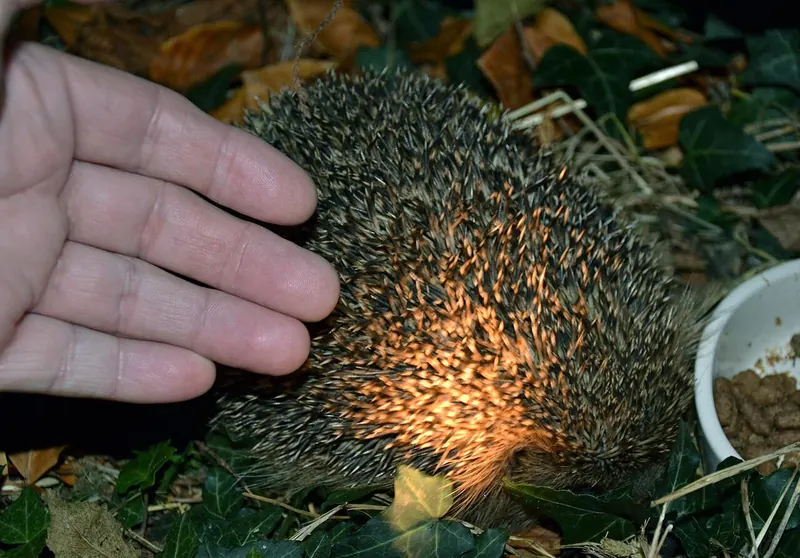
Starvation, often during hibernation, is the most common cause of death. source That’s why late-born young struggle: Hoglets from a late second litter often can't put on enough weight before hibernation. These are the "autumn orphans", still foraging well into winter, sometimes by day and often underweight. Hedgehog Street
How to help in autumn and winter
- Leave a wild corner with leaves and log piles: natural nesting material.
- Check bonfires before lighting. Bonfires: build on the day, or move the whole pile before lighting it; light from one side; check with a torch and a broom or pole, never a fork. BHPS
- Keep fresh water out, especially in dry spells.
- Seeing a hedgehog out in the day? It may need help: see Found a hedgehog.
Don’t disturb a nest or a hedgehog house in winter. If you’ve accidentally uncovered one, cover it back up gently and leave it be.