Hoglets: small, blind and mildly spiky
Courtship, pregnancy and what happens next.
The breeding season runs roughly April to September, peaking in May and June; most hoglets are born in June and July. Hedgehog Street
Gestation in the European hedgehog is 31–35 days. source Across all hedgehog species, gestation runs 35–58 days. source
A European litter is typically four to six (range two to ten), raised by the mother alone. source Average litters are four or five (up to seven), but usually only two or three are weaned successfully. Hedgehog Street
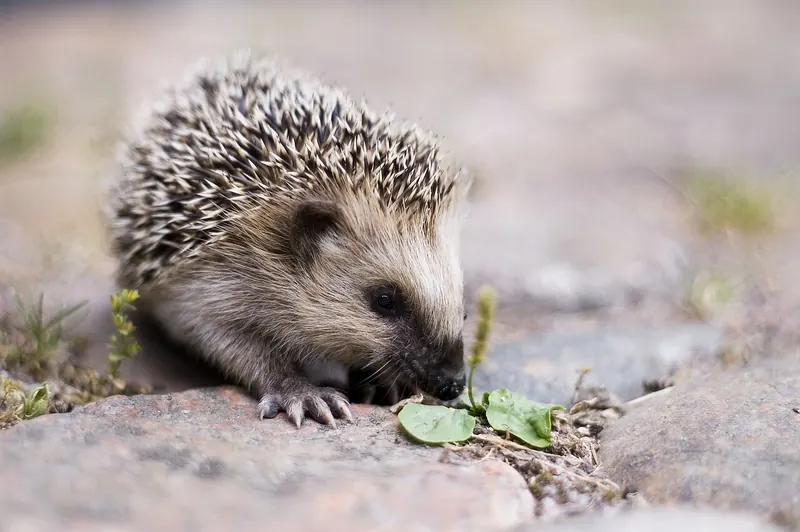
The first weeks
Newborn hoglets are blind, their spines tucked under a protective membrane that dries and falls away within hours. source
By 11 days old a hoglet can roll into a ball; weaning comes at about six weeks. source
Young hedgehogs shed their baby spines for adult ones, a process called quilling. source
Autumn orphans
Hoglets from a late second litter often can't put on enough weight before hibernation. These are the "autumn orphans", still foraging well into winter, sometimes by day and often underweight. Hedgehog Street If you see a small hedgehog out in the day or in cold weather, it may need help: follow the BHPS advice on our Found a hedgehog page and call them on 01584 890 801.
Life expectancy
A wild European hedgehog can live more than ten years, but average life expectancy is about three. source
If you find a nest of hoglets, leave it alone. A mother hedgehog may desert, or even eat, her hoglets if she is disturbed. Hedgehog Street If the babies seem to have no mother, or are cold and crying, call the BHPS for advice before you touch anything.